
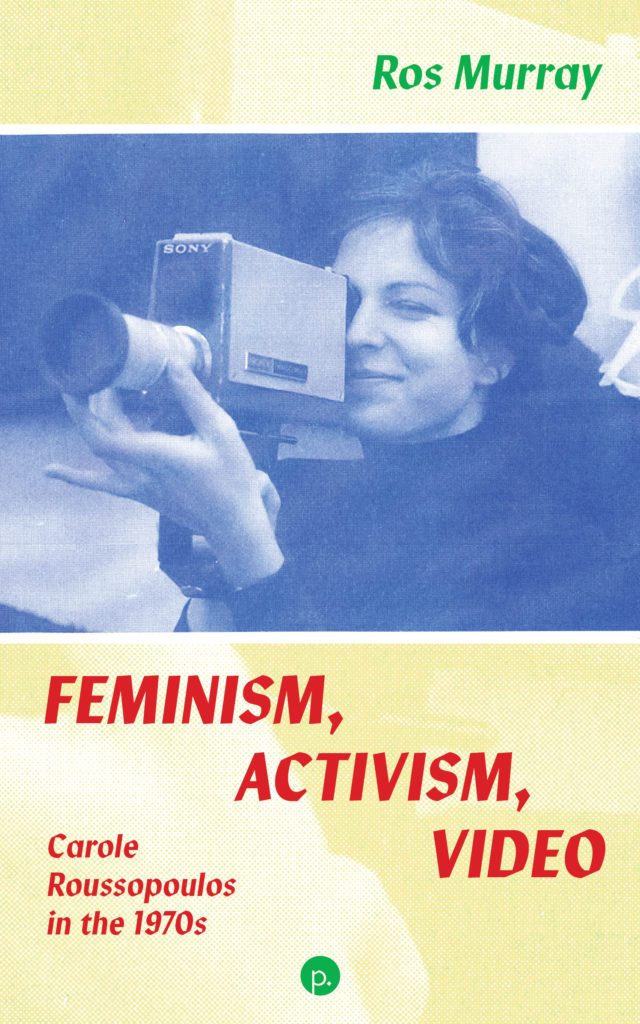


In 1968, following the largest general strike in French history, and the inauguration of a student and worker movement that built on and intersected with anti-colonial and anti-imperialist activism, a revolutionary new tool arrived on the French market: the Sony Portapak. The Portapak was a battery-powered, portable, self-contained electronic video recording system that enabled a whole new approach towards documenting activist interventions. Feminism, Activism, Video: Carole Roussopoulos in the 1970s explores the early work of video activist Carole Roussopoulos, who, forming the collectives Vidéo Out and Les Insoumuses, made over 150 videotapes documenting an extensive range of activist causes, starting with the Black Panthers, the Young Lords and the Palestine Liberation Organization. Vidéo Out made tapes with and about the Homosexual Front for Revolutionary Action and the Women’s Liberation Movement; a cycle of six tapes about the Lip factory takeover, where workers at a watch factory seized the means of production and paid themselves; and a tape about the first prostitutes’ occupation of a church in Lyon in 1975.
With the feminist collective Les Insoumuses, Roussopoulos, alongside Ioana Wieder, Delphine Seyrig, and Nadja Ringart, highlighted the participatory, inclusive aspects enabled by video technology to explore the possibilities offered by alternative feminist media. This book covers a rich period of activist history, with Roussopoulos’ engagement with militant video coinciding with the aftermath of 1968 as it continued to reverberate throughout the 1970s and beyond. It asks what video as a medium and technology brought to the struggle; why video activism differs from cinéma militant and other forms of documentary work, and why it is often said to be without a history. It argues that video collectives privilege participation, immediacy and action, resulting in a DIY politicized aesthetics that thrives on its antagonistic relationship to television and cinema.