
Speaking for the Social: A Catalogue of Methods

Imprint:

Published: 09/15/2022

What does it mean to “speak for the social” in projects of technical and infrastructural change? This is the problem that the contributors to Speaking for the Social: A Catalogue of Methods set out to explore through a series of creative interventions that reimagine the role for qualitative social science in understanding and shaping design[…]
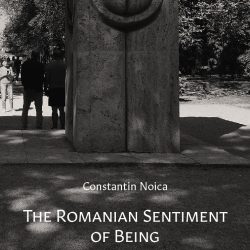

The Romanian Sentiment of Being

Published: 03/17/2022

The critical links and dependencies between language and thought formed a major new exploration of twentieth-century philosophy. Languages nuance our ideas and perceptions. From various angles and in different ways, Heidegger, Derrida, and Wittgenstein forged new ways of understanding the relationship between our views of the external world and our culturally and linguistically pre-determined modes[…]

Come As You Are, After Eve Kosofsky Sedgwick

Imprint:

Published: 04/06/2021

Come As You Are, After Eve Kosofsky Sedgwick brings together two pieces of writing. In the first, “After Eve Kosofsky Sedgwick,” Jonathan Goldberg assesses Sedgwick’s legacy, prompted mainly by writing about Sedgwick’s work that has appeared in the years since her death in April 2009. Writings by Lauren Berlant, Jane Gallop, Katy Hawkins, Scott Herring,[…]

Cinema’s Doppelgängers

Published: 06/17/2021

Cinema’s Doppelgängers is a counterfactual history of the cinema—or, perhaps, a work of speculative fiction in the guise of a scholarly history of film and movie guide. That is, it’s a history of the movies written from an alternative unfolding of historical time—a world in which neither the Bolsheviks nor the Nazis came to power,[…]

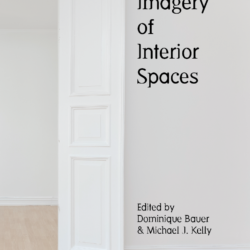
The Imagery of Interior Spaces

Published: 03/29/2019

On the unstable boundaries between “interior” and “exterior,” “private” and “public,” and always in some way relating to a “beyond,” the imagery of interior space in literature reveals itself as an often disruptive code of subjectivity and of modernity. The wide variety of interior spaces elicited in literature — from the odd room over the[…]

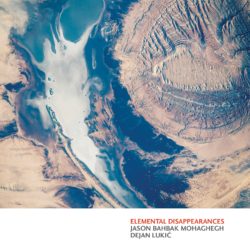
Elemental Disappearances

Imprint:

Published: 11/28/2016

The marauder’s fragment … positions itself in the prism between futility, annihilation, and playful diversion. And still, it is here that we find the last chance for a world. The things sought after here are apparitional: they appear and disappear at will; they perfect the art of materialization and vanishing. Such is the nature of living dangerously, and with it the[…]

snowline

Imprint:

Published: 02/15/2015

“Mais où sont les neiges d’antan?” François Villon’s most famous line is a kind of translation, a variation of the old “ubi sunt” trope: Where are the things that used to be? But Villon specifically asks: Where are the snows? Even in the thick of a snowy winter, this snow is not the same as[…]

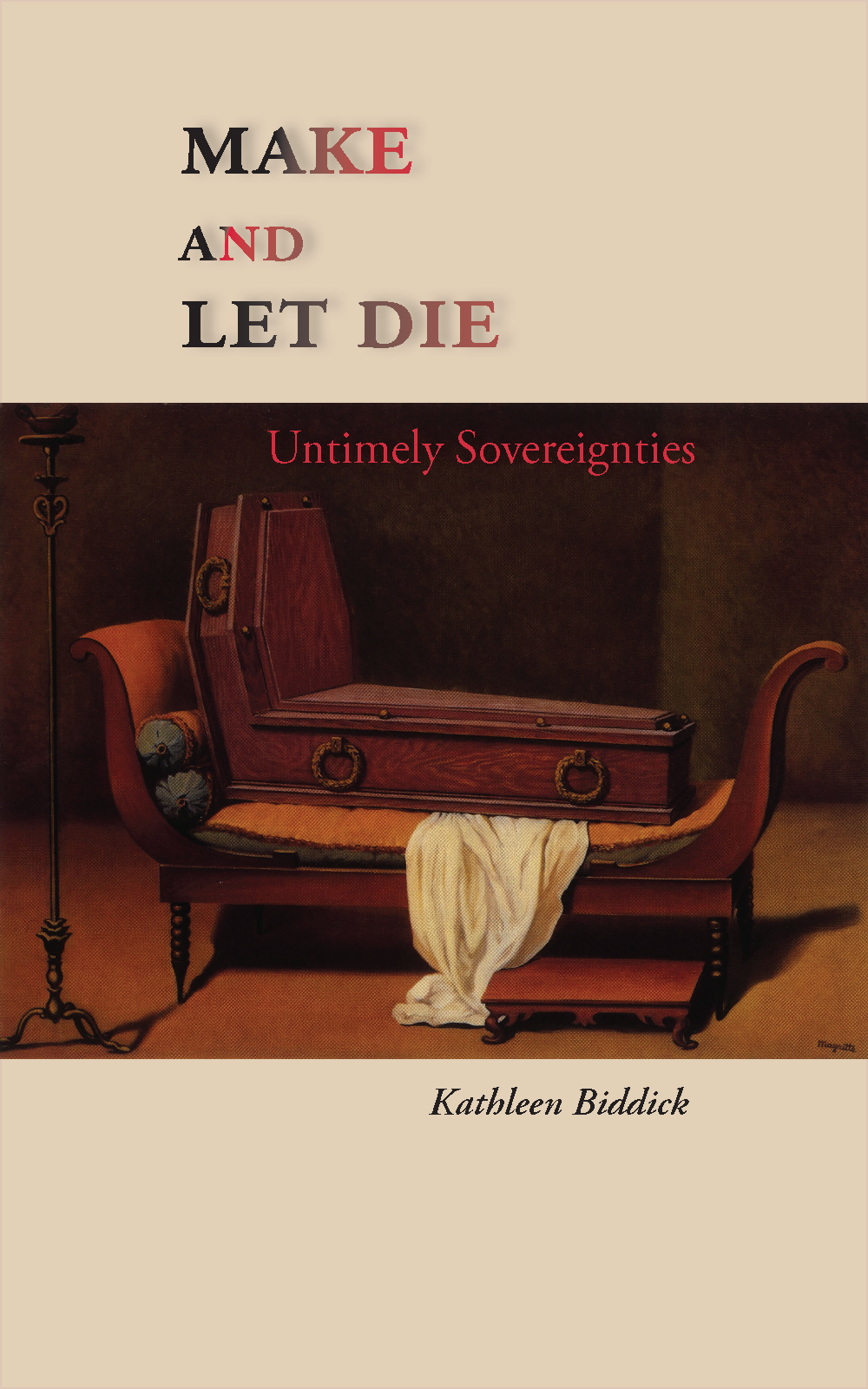
Make and Let Die: Untimely Sovereignties

Published: 03/10/2016

This collection of essays by one of medieval studies’ most brilliant historians argues that the analysis and critique of biopower, as conventionally defined by Michel Foucault and then widely assumed in much contemporary theory of sovereignty, is a sovereign mode of temporalization caught up in the very time-machine it ostensibly seeks to expose and dismantle.[…]