
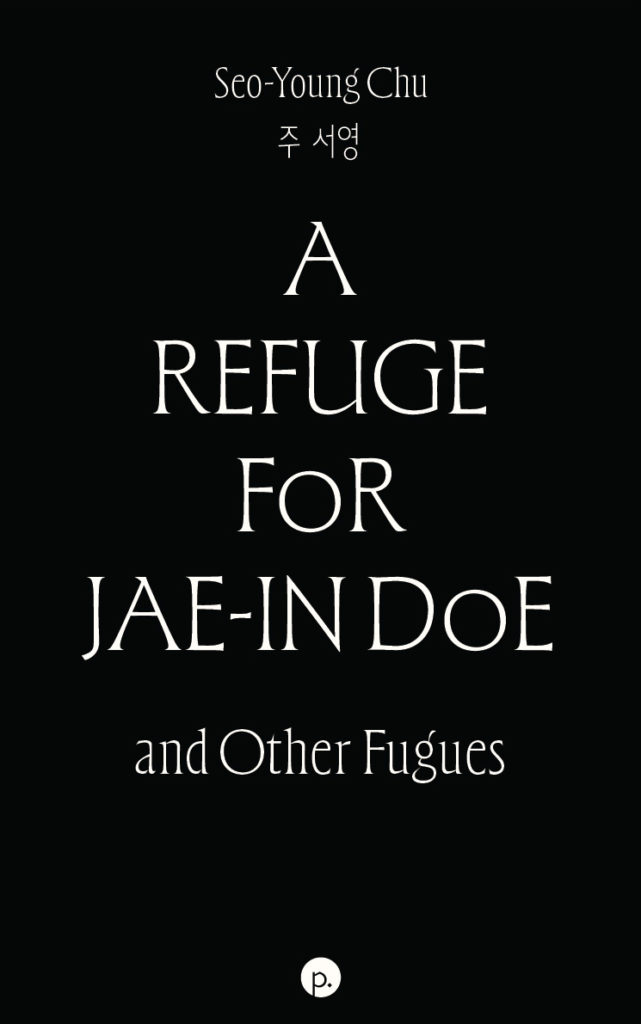

A Refuge for Jae-in Doe and Other Fugues is the lyric memoir of Korean American survivor Seo-Young (Jennie) Chu. It is also a meta-memoir, one that is aware of its makeshift nature, poses questions about the genre(s) it inhabits, and self-consciously reflects on what it means to write autobiographically. Throughout the book, Chu experiments with the first-person singular “I,” tracing the polyphonies always implicit in the memoirist’s first-person singular voice. Writing polyphonically allows Chu to explore the plurality within her “I,” the uncanny homes she has found in dissociation, the appeal of other-than-first-person pronouns as sites of autobiographical consciousness, as well as the literal and figurative fugue states—from spells of incantatory writing to oneiric re-namings of the self—in which Chu finds refuge from intergenerational distress and rape trauma.
Moving from one fugue state to another, Chu explores a wide range of topics relevant to her meta-autobiography, including the nature of time, the history of the sonnet, code-switching, suicidal ideation, the model minority myth, late-stage capitalism, institutional violence, rape culture, standardized tests, the Korean Demilitarized Zone, what it means to read a book, and what it means to be a self.
About the Author
 Seo-Young Chu (주 서영) teaches in the English Department at Queens College, CUNY. She is the author of Do Metaphors Dream of Literal Sleep? (Harvard, 2010), as well as numerous critical essays and creative works exploring science fiction, intergenerational trauma, mental illness, rape culture, and sexual violence.