The Retro-Futurism of Cuteness

Published: 11/04/2017

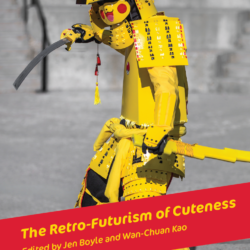
Is it possible to conceive of a Hello Kitty Middle Ages or a Tickle Me Elmo Renaissance? The Oxford English Dictionary dates the first reference to “cute” in the sense of “attractive, pretty, charming” to 1834. More recently, Sianne Ngai has offered a critical overview of the cuteness of the twentieth-century avant-garde within the context[…]

The Republic of Cthulhu: Lovecraft, the Weird Tale, and Conspiracy Theory

Published: 11/07/2016

If parapolitics, a branch of radical criminology that studies the interactions between public entities and clandestine agencies, is to develop as an academic discipline, then it must develop a coherent theory of aesthetics in order to successfully perform its primary function: to render perceptible extra-judicial phenomena that have hitherto resisted formal classification. Wilson offers the work[…]

Photography in the Middle: Dispatches on Media Ecologies and Aesthetics

Published: 10/31/2016

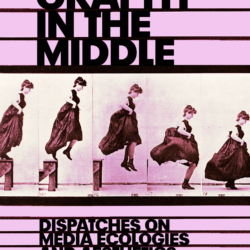
It’s easy to forget there’s a war on when the front line is everywhere encrypted in plain sight. Gathered in this book’s several chapters are dispatches on the role of photography in a War Universe, a space and time in which photographers such as Hilla Becher, Don McCullin and Eadweard Muybridge exist only insofar as[…]

The Pedagogics of Unlearning

Published: 05/23/2016

What does it mean to unlearn? Once we have learned something, is it ever possible to unlearn that something? If something is said to have been unlearned, does that mean that it is simply forgotten or does some residual force of learning, some perverse force, also resonate in ways that might help us to rethink[…]

Topie Impitoyable: The Corporeal Politics of the Cloth, the Wall, and the Street

Published: 04/25/2016

It always seems useful to situate a discourse in the wider context of one’s ongoing research. This new book begins where the previous one, Weaponized Architecture: The Impossibility of Innocence, ended. I wrote it in 2010 and my friends Baraona Pohl and César Reyes had the kindness to publish it in 2012. That book started with the hypothesis that architecture is inherently violent because of the way it dissects space and because of the resulting spatial organization of bodies. Architecture is a social discipline, and therefore this violence always ends up as an instrument of politics, whether it’s done consciously or not.

Dotawo: A Journal of Nubian Studies 3

Imprint:

Published: 08/11/2016

Dotawo: A Journal of Nubian Studies offers a platform in which the old meets the new, in which archaeological, papyrological, and philological research into Meroitic, Old Nubian, Coptic, Greek, and Arabic sources confront current investigations in modern anthropology and ethnography, Nilo-Saharan linguistics, and critical and theoretical approaches present in post-colonial and African studies. Dotawo gives[…]

After the “Speculative Turn”: Realism, Philosophy, and Feminism

Published: 10/26/2016

Recent forms of realism in continental philosophy that are habitually subsumed under the category of “speculative realism,” a denomination referring to rather heterogeneous strands of philosophy, bringing together object-oriented ontology (OOO), non-standard philosophy (or non-philosophy), the speculative realist ideas of Quentin Meillassoux and Marxism, have provided grounds for the much needed critique of culturalism in gender theory, and[…]