
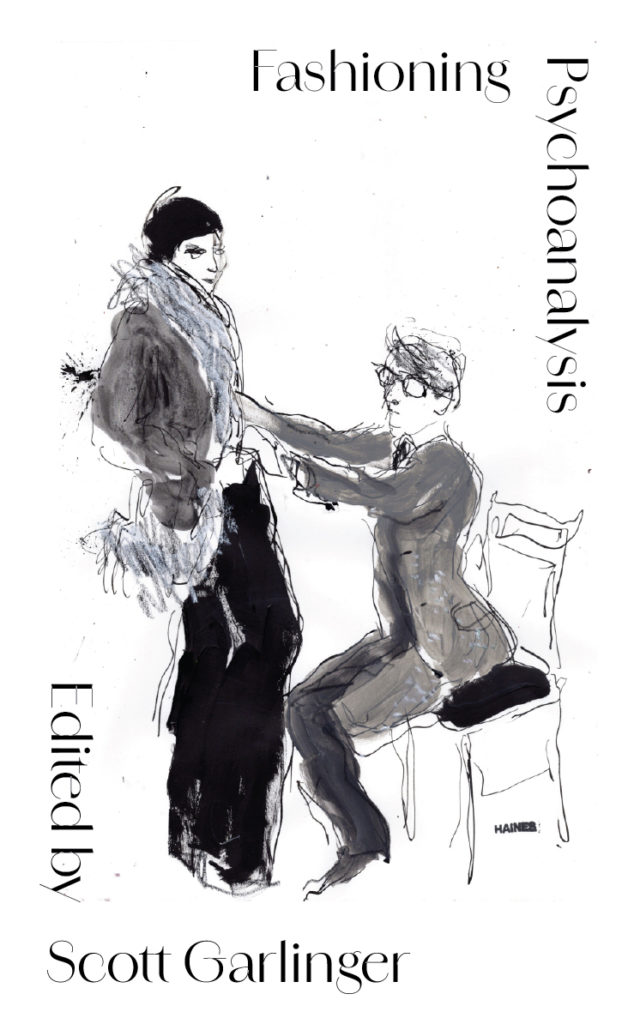



If every article is a word and every outfit a statement, then the psychoanalyst is never silent. Much is made of clothes and style by psychoanalysis, but little is said of how psychoanalysts style themselves. Fashion inundates the world with sexual concern, yet psychoanalysis is … a bit repressed on the practitioners’ manners of dress. If analytic technique consists in the total sum of psychoanalysts’ effort, shouldn’t their dress be considered? Since little is said of what one should wear, one must draw inference from how analysts have styled themselves. The archives of photographs show garb reflective of each generation: fashioning themselves as scientists, doctors, public intellectuals, suits, dresses, hair pulled back or combed over. No sentence or essay could make up for a century of silence, so Fashioning Psychanalysis begins with conversation.
The interviews gathered here — with Laurence Rickels, Avgi Saketopoulou, Berjanet Jazani, Anouchka Grose, Marcus Coelen, and Jamieson Webster, with a foreword in dialogue with Aranye Fradenburg Joy — move through the material culture of clinical practice with the candor and specificity that psychoanalytic writing has long withheld from itself. The consulting room as an archaeological collection, as a surface of projection and transference. The analyst’s clothing as a statement about gender, desire, and institutional belonging. The silence of training programs on the question of dress as itself is a symptom. What this alphabet of design yields is a new vocabulary for elements in psychoanalysis that are not speaking but always saying something.