Divine Name Verification: An Essay on Anti-Darwinism, Intelligent Design, and the Computational Nature of Reality

Published: 08/23/2013

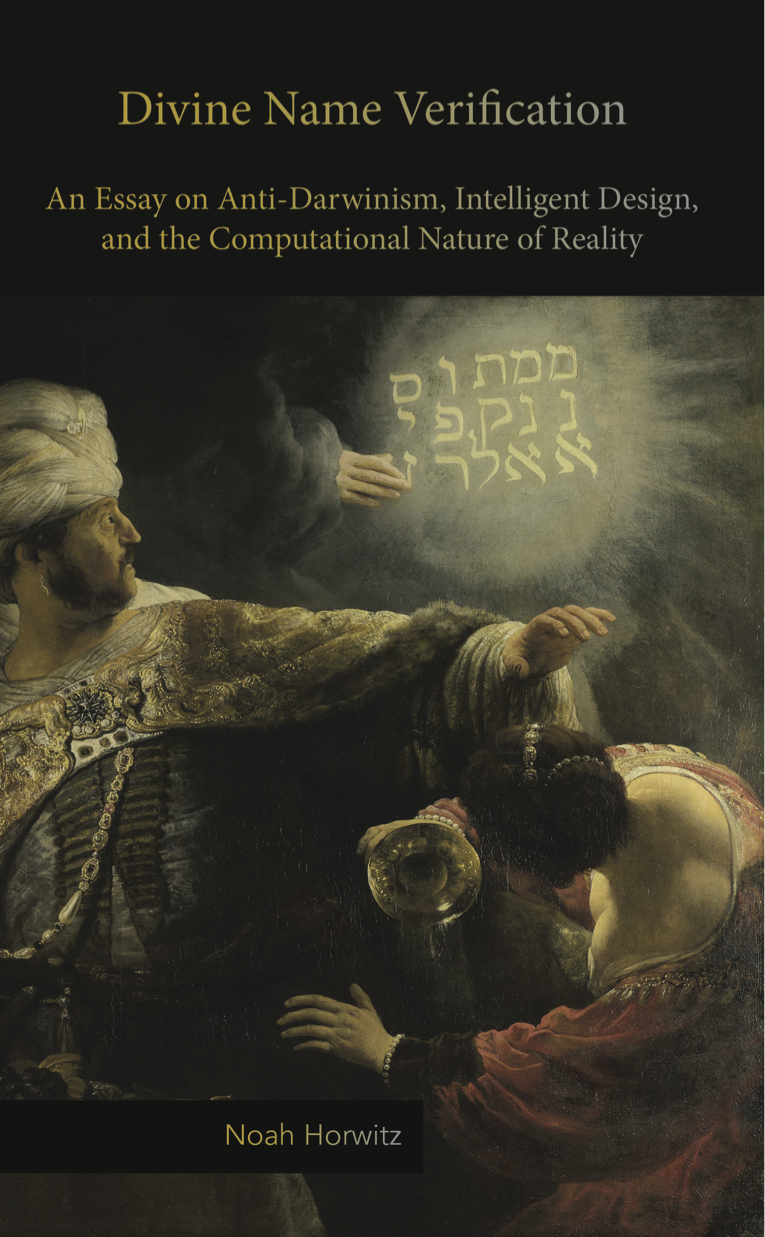
In this book, Noah Horwitz argues that the age of Darwinism is ending. Building on the ontological insights of his first book Reality in the Name of God in order to intervene into the intelligent design versus evolution debate, Horwitz argues in favor of intelligent design by attempting to demonstrate the essentially computational nature of[…]
Gaffe/Stutter

Imprint:

Published: 10/06/2013

Access interactive companion web-book here. Gaffe/Stutter is a dead letter to Deleuze’s Logic of Sense. It began as a series of diagrams, two-dimensional memory palaces that sketch the vectors of each chapter’s paradox; it became an elaborate plan for a web-based diagrammatic (r)e(n)dition of Logic of Sense, built on zoomable, annotatable high-resolution scans of these diagrams. Conceived[…]

In Divisible Cities

Imprint:

Published: 08/26/2013

Access interactive companion web-book here. Italo Calvino rewrites Baudrillard’s America with a more global eye, as edited by Roland Barthes. In Divisible Cities takes Italo Calvino’s classic re-imagining of Venice, viewed in the mind’s eye from many different metaphysical angles, and projects it on to the world at large. Where the Italian saw his favorite[…]

Hippolytus

Imprint:

Published: 08/21/2012

Euripides wrote two plays called Hippolytus. In this, the second, he dramatized the tragic failure of perfection. This translation comes in two forms; the first presents a simulacrum of the text as it might have appeared in unprocessed form to a reader sometime shortly after Euripides’ death. The second processes the drama into the reduced but[…]

Reality in the Name of God

Published: 01/18/2012

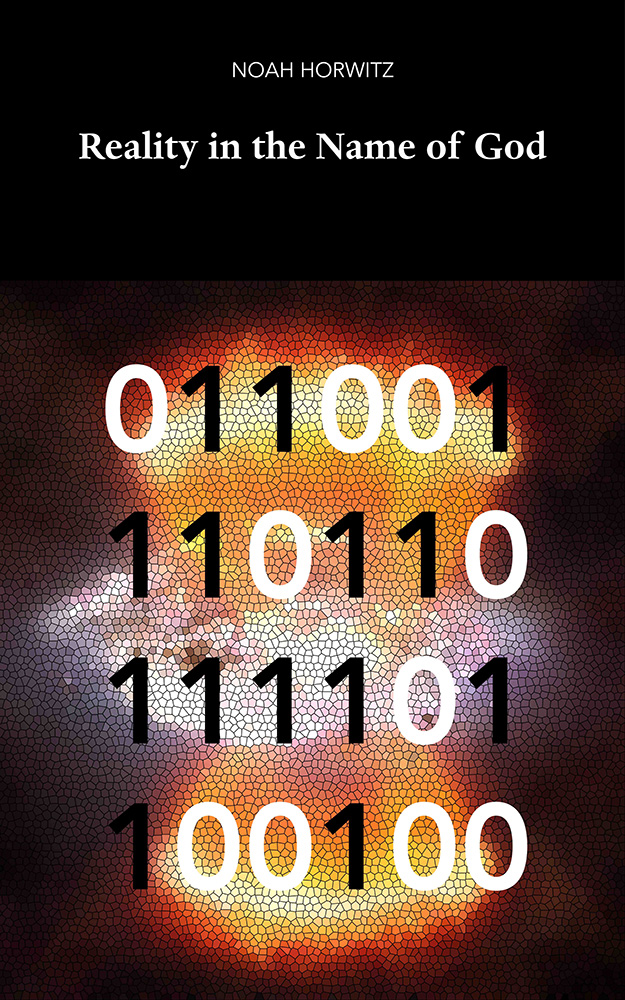
What should philosophical theology look like after the critique of Onto-theology, after Phenomenology, and in the age of Speculative Realism? What does Kabbalah have to say to Philosophy? Since Kant and especially since Husserl, philosophy has only permitted itself to speak about how one relates to God in terms of the intentionality of consciousness and[…]

Writing Death

Imprint:

Published: 06/06/2011

Writing Death opens a meditation on the possibility of mourning; of whether there is a subject, or even object, that one mourns—of whether one is mourning, can only mourn, the very impossibility of mourning itself. The manuscript is framed by two attempts at mourning—Avital Ronell’s “The Tactlessness of an Unending Fadeout” and Jeremy Fernando’s “adieu.” In-between—for[…]