
Come As You Are, After Eve Kosofsky Sedgwick

Imprint:

Published: 04/06/2021

Come As You Are, After Eve Kosofsky Sedgwick brings together two pieces of writing. In the first, “After Eve Kosofsky Sedgwick,” Jonathan Goldberg assesses Sedgwick’s legacy, prompted mainly by writing about Sedgwick’s work that has appeared in the years since her death in April 2009. Writings by Lauren Berlant, Jane Gallop, Katy Hawkins, Scott Herring,[…]
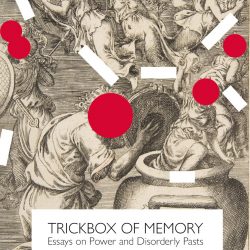
Trickbox of Memory: Essays on Power and Disorderly Pasts

Published: 12/08/2020

Reach into this trickbox of memory and rummage around: you may find a tiny spaceship, or perhaps a signpost, a parade, a raised fist, or an entire museum. The essays in Trickbox of Memory: Essays on Power and Disorderly Pasts draw on literary criticism, post-qualitative inquiry, new materialisms, and political activism to dismember and reanimate[…]

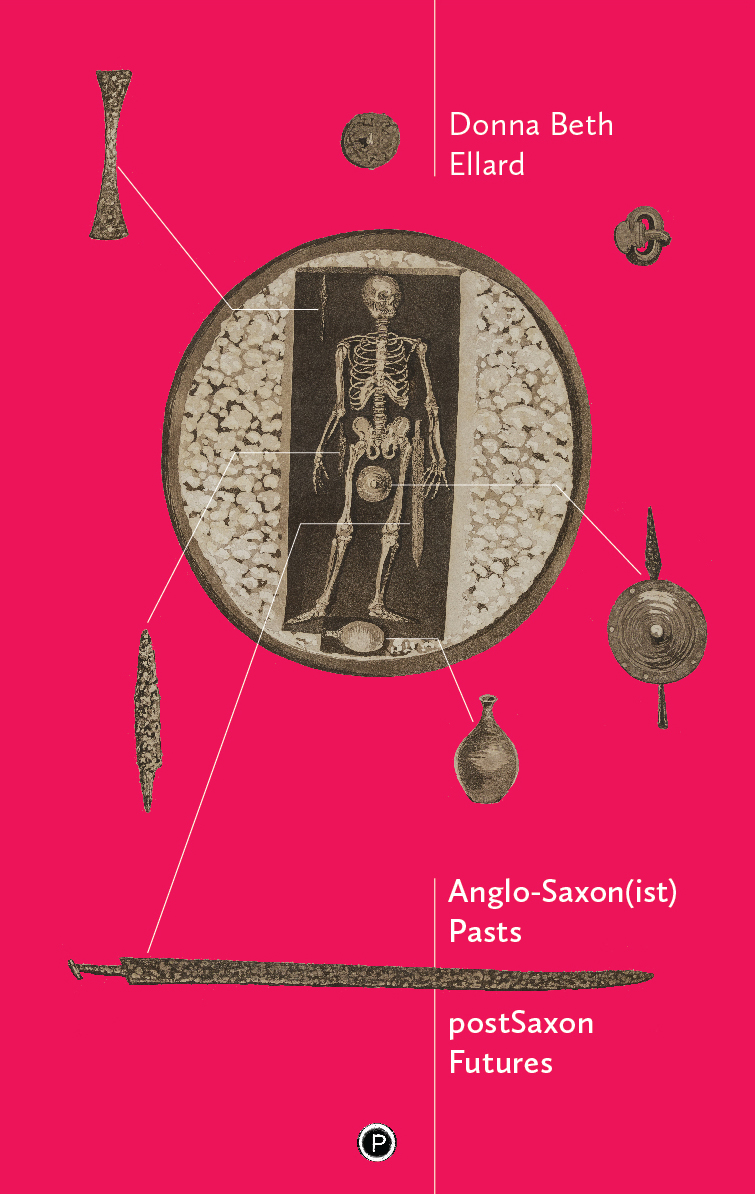
Anglo-Saxon(ist) Pasts, postSaxon Futures

Published: 12/30/2019

We are all, no matter how little we like it, the bearers of unwanted and often shunned memory, of a history whose infiltrations are at times so stealthy we can pretend otherwise, and at times so loud we can’t hear much of anything else. We’re still here — there differently than those before us, but[…]

Mythodologies: Methods in Medieval Studies, Chaucer, and Book History

Published: 05/31/2018

Mythodologies challenges the implied methodology in contemporary studies in the humanities. We claim, at times, that we gather facts or what we will call evidence, and from that form hypotheses and conclusions. Of course, we recognize that the sum total of evidence for any argument is beyond comprehension; therefore, we construct, and we claim, preliminary[…]

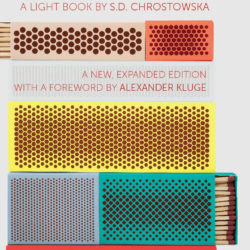
MATCHES: A Light Book

Published: 04/16/2019

A new, expanded edition, with a Foreword by Alexander Kluge. The match: little stick tipped with combustible stuff, sparked by friction; typically comes in a book or a box or a bundle (the point being: never alone). The highly portable match lighting more or less when required was a great nineteenth-century innovation. Before, we had[…]

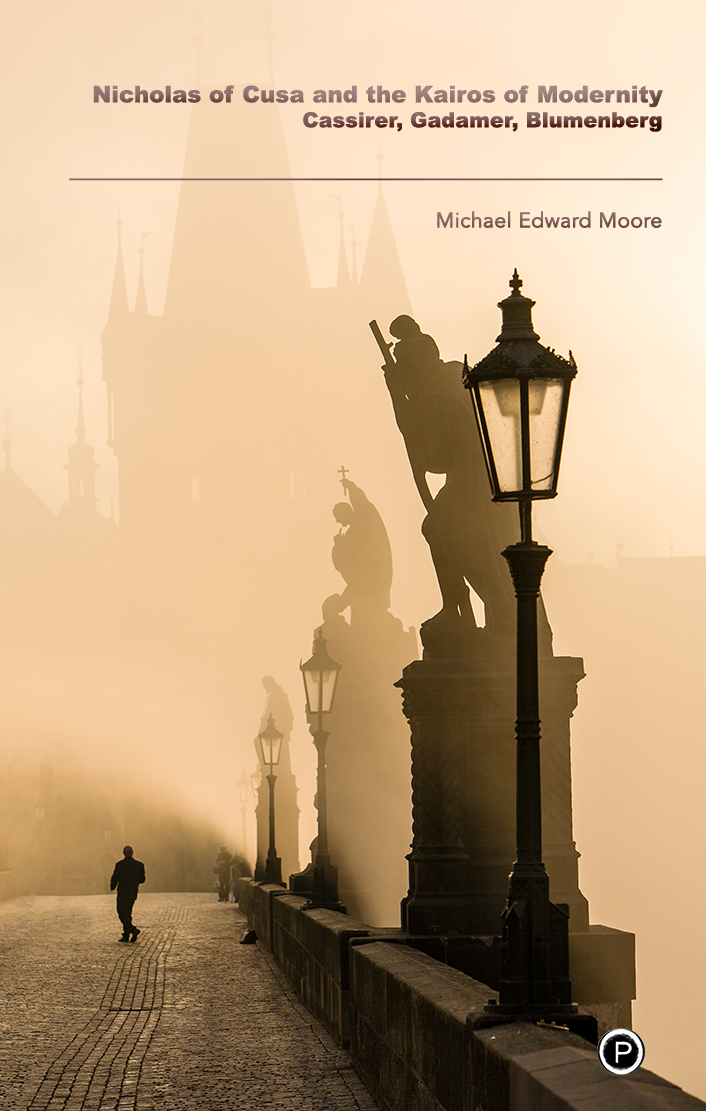
Nicholas of Cusa and the Kairos of Modernity: Cassirer, Gadamer, Blumenberg

Imprint:

Published: 09/05/2013

In this far-reaching essay, historian Michael Edward Moore examines modernity as an historical epoch following the end of the medieval period — and as a “messianic concept of time.” In the early twentieth century, a debate over the meaning and origins of modernity unfolded among the philosophers Ernst Cassirer, Hans-Georg Gadamer and Hans Blumenberg. These[…]