The Witch and the Hysteric

Imprint:

Published: 08/08/2014

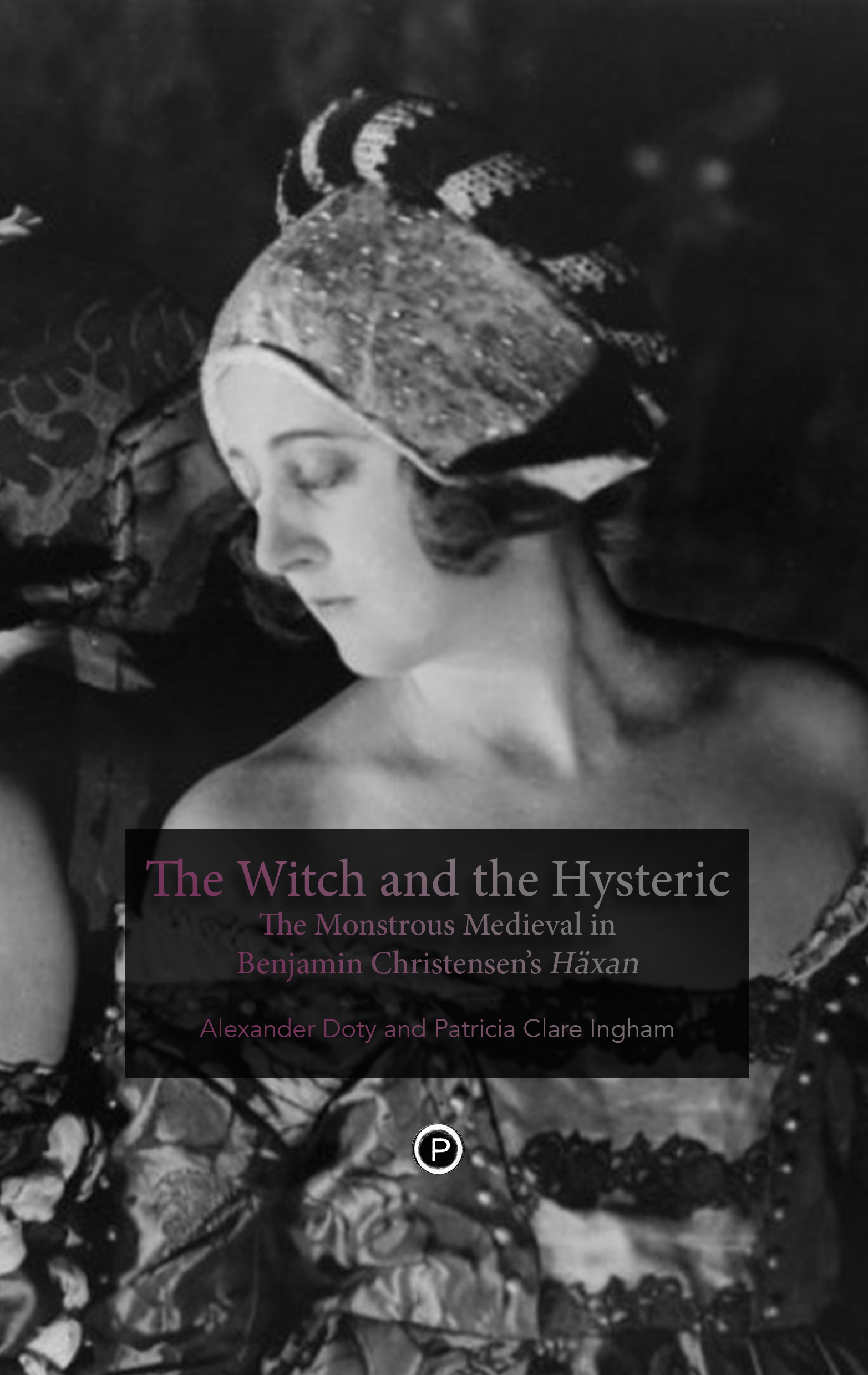
Benjamin Christensen’s 1922 Swedish/Danish film Häxan (known under its English title as Witchcraft Through the Ages) has entranced, entertained, shocked, and puzzled audiences for nearly a century. The film mixes documentary with fantasy, history with theatrics, religion and science, the medieval past and modern culture. This uncanny content is compounded by the film’s formal strangeness,[…]
Itinerant Spectator/Itinerant Spectacle

Published: 12/20/2013

Read Ayanna Thompson’s review of Itinerant Spectator/Itinerant Spectacle in Theatre Journal! Itinerant Spectator/Itinerant Spectacle moves across the landscape of European performance in late 20th and early 21st centuries, recounting performance in circulation across national borders and across the itinerant bodies of spectators who travel to meet performances that travel. Itinerant Spectator/Itinerant Spectacle suggests spectating is[…]

On Style: An Atelier

Published: 12/06/2013

Scholarship in medieval studies of the past 20 or so years has offered some provocative experiments in, and elegant exempla of, style. Scholars such as Anne Clark Bartlett, Kathleen Biddick, Catherine Brown, Brantley Bryant, Michael Camille, Jeffrey Jerome Cohen, Carolyn Dinshaw, James Earl, L.O. Aranye Fradenburg, Roberta Frank, Amy Hollywood, Cary Howie, C. Stephen Jaeger,[…]

Burn After Reading

Imprint:

Published: 04/28/2014

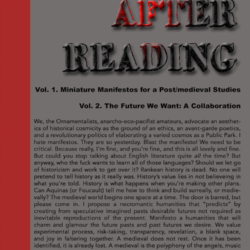
The essays, manifestos, rants, screeds, pleas, soliloquies, telegrams, broadsides, eulogies, songs, harangues, confessions, laments, and acts of poetic terrorism in these two volumes — which collectively form an academic “rave” — were culled, with some later additions, from roundtable sessions at the International Congress on Medieval Studies in 2012 and 2013, organized by postmedieval: a[…]

Nicholas of Cusa and the Kairos of Modernity: Cassirer, Gadamer, Blumenberg

Imprint:

Published: 09/05/2013

In this far-reaching essay, historian Michael Edward Moore examines modernity as an historical epoch following the end of the medieval period — and as a “messianic concept of time.” In the early twentieth century, a debate over the meaning and origins of modernity unfolded among the philosophers Ernst Cassirer, Hans-Georg Gadamer and Hans Blumenberg. These[…]

thN Lng folk 2go: Investigating Future Premoderns™

Published: 10/13/2013

Neomedievalisms are cultural practices that breathe a bouquet of premoderns as permanent rehearsals of coming events. Where medievalists may be prone to police the post-medieval weald for inauthentic medievalisms, neomedievalists embrace the articulation and mobilisation of metahistorical anachronisms. To the medievalist, medievalisms provide powerful indexes that reveal how post-medieval societies have variously imagined ‘little middle ages’ to[…]

Transparent Things: A Cabinet

Published: 03/28/2013

Inspired by a passage in Vladmir Nabokov’s Transparent Things (1972), and also compiled as a future love letter to The Material Collective, the essays collected here play with the transparency of pedagogy, scholarship, and writing, as well as with objects that can be seen through, such as crystals and stained glass. As Nabokov wrote, When[…]

Hippolytus

Imprint:

Published: 08/21/2012

Euripides wrote two plays called Hippolytus. In this, the second, he dramatized the tragic failure of perfection. This translation comes in two forms; the first presents a simulacrum of the text as it might have appeared in unprocessed form to a reader sometime shortly after Euripides’ death. The second processes the drama into the reduced but[…]